

The product image is for illustrative purposes only and may not exactly reflect the actual characteristics of the wine.
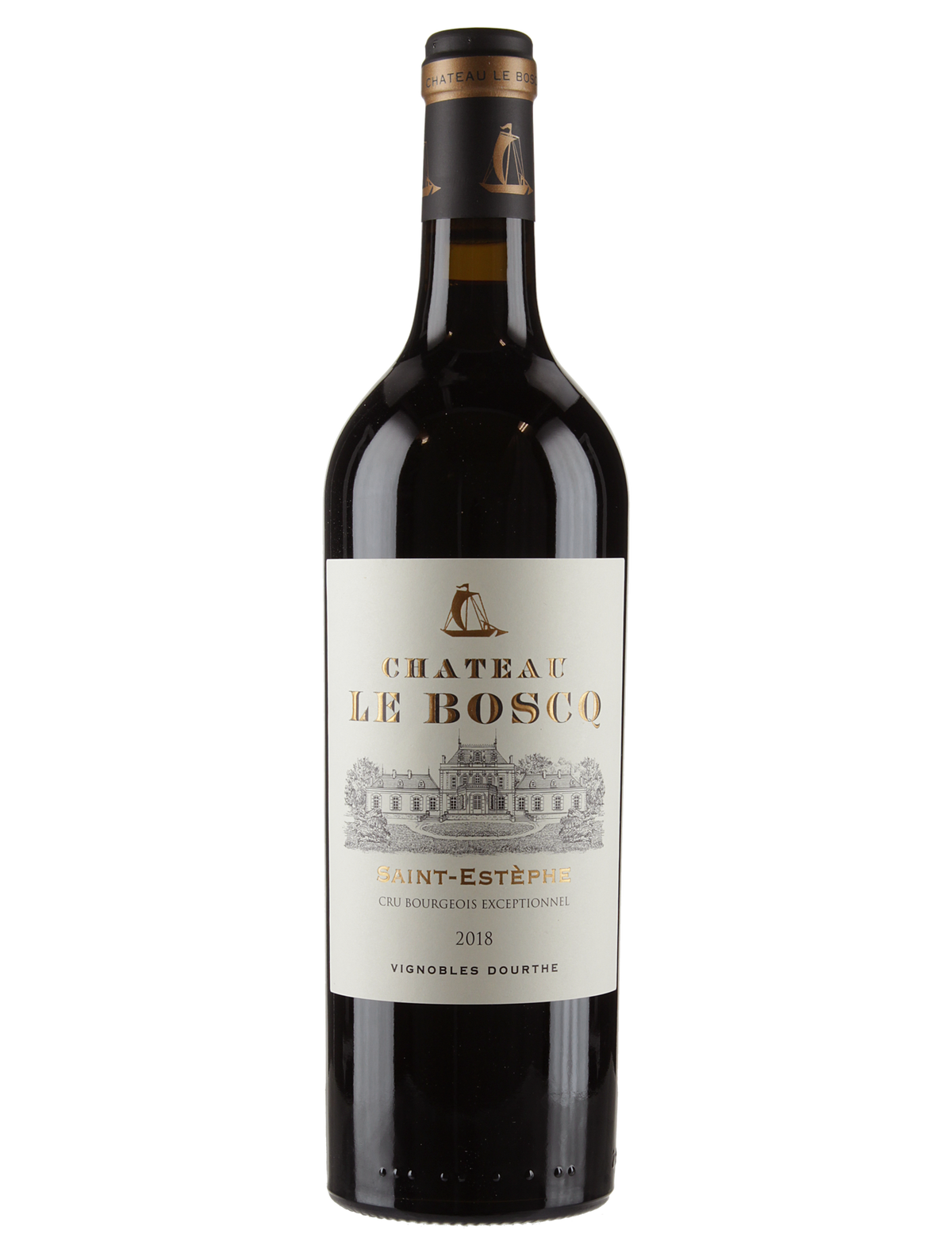
The wine
- Colour
- Red
- Alcohol
- 12.5% vol
Critics' scores
- Robert Parker / Wine Advocate 90-92
Composed of 46% Cabernet Sauvignon, 46% Merlot, 6% Petit Verdot and 2% Cabernet Franc, the 2019 le Boscq sports a deep purple-black color and expressive notes of baked black cherries, warm cassis and blackberry preserves with touches of pencil lead, bouquet garni, cast-iron pan and woodsmoke. Medium to full-bodied, the palate delivers a good intensity of crunchy black fruits with a sturdy frame of grainy tannins and bags of freshness, finishing with a compelling herbal lift.
- Wine Spectator 92
Ripe and juicy, boasting both burly and sleek aspects, with black currant and blackberry fruit that pumps through and hints of licorice root, tobacco and warm earth. Shows lovely persistence through the finish, as the fruit and earth notes meld. Features a touch of old school, too. Cabernet Sauvignon, Merlot, Petit Verdot and Cabernet Franc. Best from 2023 through 2035. 7,833 cases made, 125 cases imported. — JM
- James Suckling 94
Intense and focused with cigar tobacco, cedar, spice and berry. Currant too. Medium- to full-bodied. The fruit is there at the beginning and then it takes off at the finish. Give this two or three years to soften and come together. Complex and long. Drink after 2024.
The producer: Château Le Boscq
Château Le Boscq is among the greatest estates in the Saint-Estèphe appellation. In fact, Thomas Barton, creator of one of the first négociant companies in Bordeaux took over the Le Boscq property in 1749. Barton put all of his energy into Le Boscq for over 30 years, with the aims of crafting great, quality wines. At the end of the 19th century, Jean Grazilhon, a loyal servant on the estate, whose grandfather was previously the estate's steward working under Thomas Barton, performed a remarkable job of managing the estate. He went on to become its owner in 1889, and commissioned the existing château in 1891. After years of hard work, Château Le Boscq was awarded Cru Bourgeois status in 1932. The successive crises of the 20th century left this magnificent property somewhat neglected for several decades until its acquisition in 1995 by Dourthe. From this point forwards, there was a clear objective: to exploit the full potential of the terroir and vineyard and transform Château Le Boscq into one of the finest wines in Saint-Estèphe.