

L'immagine del prodotto è da intendersi a scopo illustrativo e potrebbe non rispecchiare esattamente le caratteristiche reali del vino.
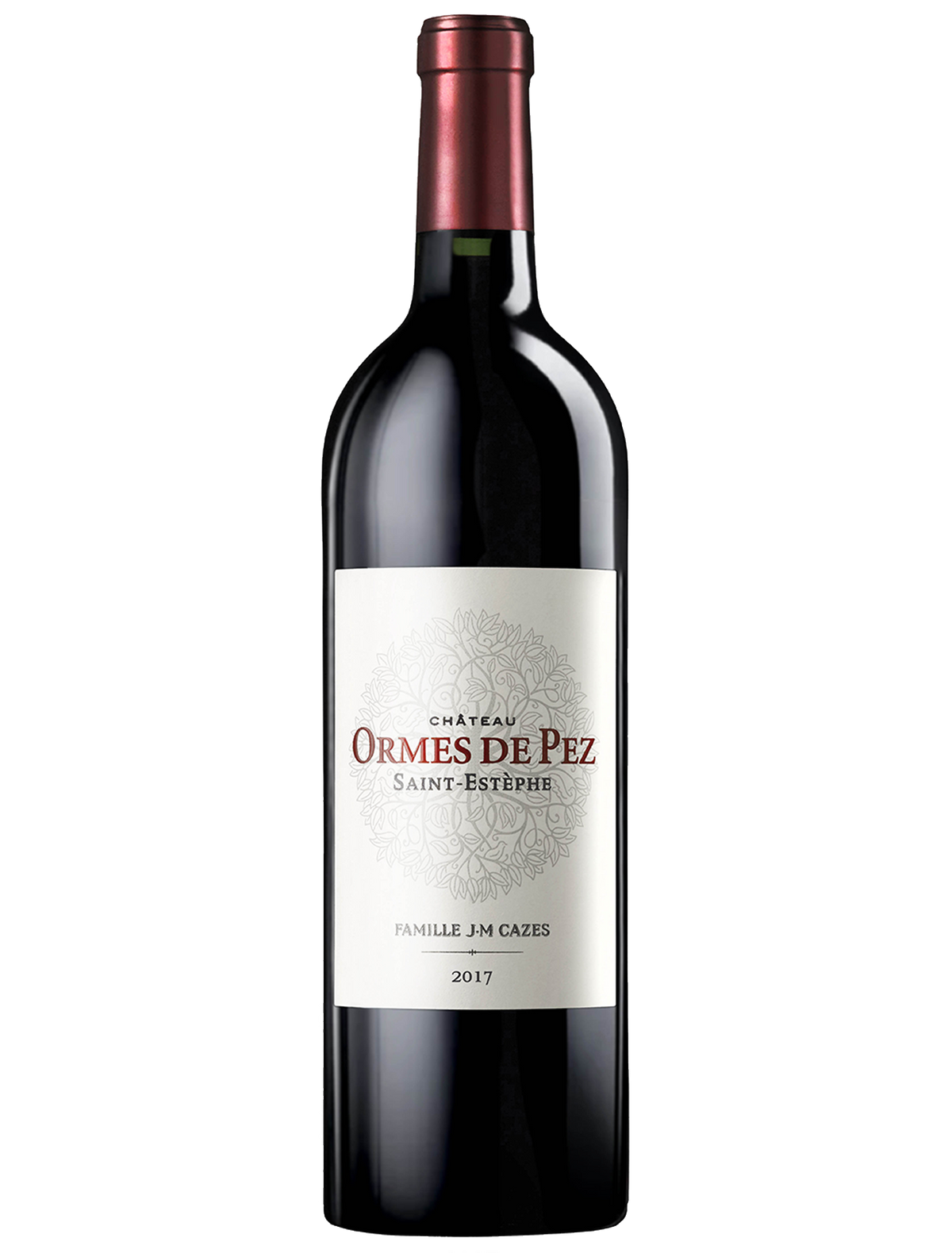
Il vino
- Colore
- Rosso
- Alcol
- 12.5% vol
Punteggi della critica
- Robert Parker / Wine Advocate 90
Medium to deep garnet-purple colored, the 2017 Ormes de Pez features black cherries and cassis notions over a core of fragrant earth, stewed tea and tobacco plus a waft of forest floor. Medium-bodied, the palate is packed with juicy black fruit with a grainy texture and long, mineral-tinged finish.
- Wine Spectator 88-91
Open-knit, with a core of plum and cherry fruit carried by light cedar, tobacco and warm stone notes. Shows a light smoky echo at the end.—J.M.
- James Suckling 92
A beautiful red with aromas and flavors of plums, spices and burnt chocolate. Medium-bodied, creamy and fruity. Juicy finish. A blend of 51% merlot, 42% cabernet sauvignon, 6% cabernet franc and 1% petit verdot. Drink or hold.
- René Gabriel 16
André Kunz: Würziges, leichtes, frisches Bouquet, roter Cassis, Heidelbeeren, heller Tabak. Mittelkräftiger, bourgeoiser Gaumen mit feinsandigem Tannin, eher schlanker, fein muskulöser Struktur, guter Aromatik, leichter Abgang. Kann noch zulegen. 16/20 2022 - 2036
Il produttore: Château Les Ormes de Pez
Situato nella regione di Saint-Estèphe, Château Ormes de Pez prende il proprio nome dal villaggio in cui si trova: Pez. La prima parte del nome significa “olmo”, che è la pianta che decora l’etichetta. La tenuta risale al XVIII secolo, ma alla fine degli anni Venti è stata acquistata dalla famiglia Cazes di Château Lynch Bages. I suoi 38 ettari sono ampiamente dispersi su differenti terroir, con circa un terzo su ghiaia e argilla, un terzo su ghiaia e sabbia e un’altra parte su pura ghiaia, vicina a Tronquoy-Lalande. I vigneti sono piantumati a Cabernet Sauvignon (50%), Merlot (33%), Cabernet Franc (10%) e Petit Verdot (2%). Per molti versi, il vino è prodotto come Lynch Bages: tradizionalmente eppure con alcune tecniche moderne che permettono alla purezza del fruttato di rimanere intatta pur conservando il carattere del terroir. È certamente uno dei vini più ricercati di Saint-Estèphe, perché tende ad avere una notevole profondità di fruttato e invecchia bene.