

The product image is for illustrative purposes only and may not exactly reflect the actual characteristics of the wine.
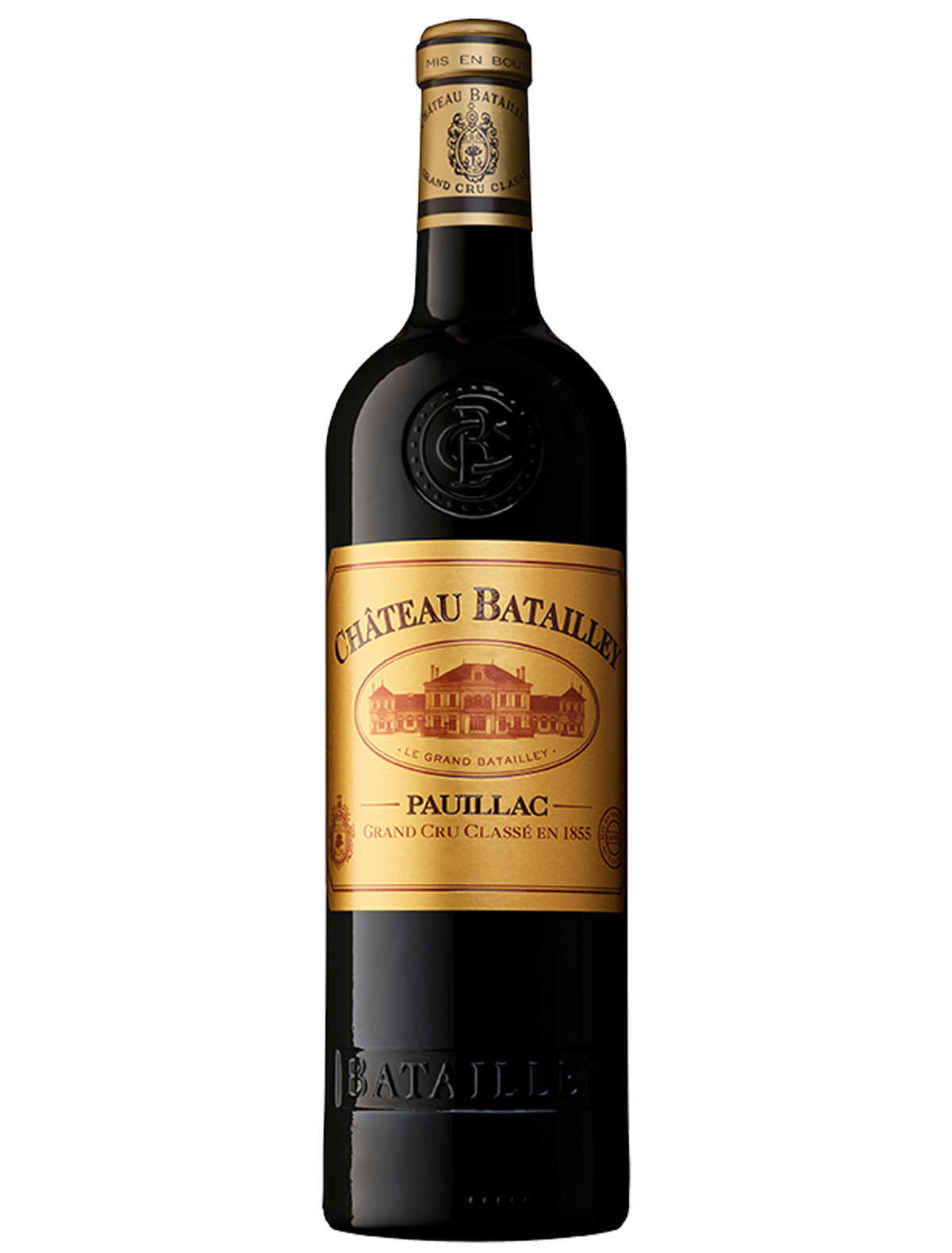
The wine
- Colour
- Rosso
- Alcohol
- 12.5% vol
Critics' scores
- Robert Parker / Wine Advocate 89
The medium to deep garnet colored 2009 Batailley has a maturing, earthy/broody nose with notions of scorched earth and sweaty leather over a core of blue and black fruit preserves, fried herbs and rusty nails. Firm and medium to full-bodied with a chewy texture, it has a rather rustic finish.
- Wine Spectator 91
A chewy core of black currant, tobacco and roasted apple wood stretches out through the grip-framed finish. Fresh acidity rides underneath to keep it all lively. A solid version, with a throwback hint. Best from 2013 through 2023. — JM
- James Suckling 93
A rich yet dry Pauillac that's now very attractive to drink and has a good harmony in spite of the generous alcohol. Long, supple finish. Drink or hold.
- René Gabriel 18
Tiefes Purpur, satt in der Mitte, Granatschimmer am Rand. Splendides, offenes Black-Currantbouquet, süsslich mit einer Nuance Brombeerengelée. Im Gaumen weich, samtig, sehr feine Tannine, schon völlig präsent und wie damals ein paar 82er daher kommend. Hier wird man sehr früh viel Spass haben und das gut und locker 20 Jahre lang. Kaufen!
The producer: Château Batailley
Château Batailley is one of the oldest estates in Pauillac and has been classified as a Fifth Growth since the 1855 Classification. Its name is believed to refer to a battle fought on these lands in 1453, during the Hundred Years' War. Vines have been cultivated here since the 17th century, reflecting the long winemaking tradition of this historic estate.
At the beginning of the 19th century, Daniel Guestier acquired the property and set about modernising it, expanding the vineyard and improving the quality of its wines. These efforts contributed to Batailley's recognition in the prestigious 1855 Classification. In 1924, Marcel and Francis Borie acquired the estate, marking the beginning of its history with the Borie-Castéja family. When the property was divided in 1941, Marcel retained Château Batailley, while the other part wuld become Chateau Haut-Batailley.
Since the 2000s, under the direction of Philippe Castéja, Chateau Batailley has continued its pursuit of excellence. In 2006, the estate introduced a new vat room, enabling plot-by-plot vinification. Today, this historic property remains deeply connected to its identity and the terroir of Pauillac, perpetuating several centuries of winemaking history.