

The product image is for illustrative purposes only and may not exactly reflect the actual characteristics of the wine.
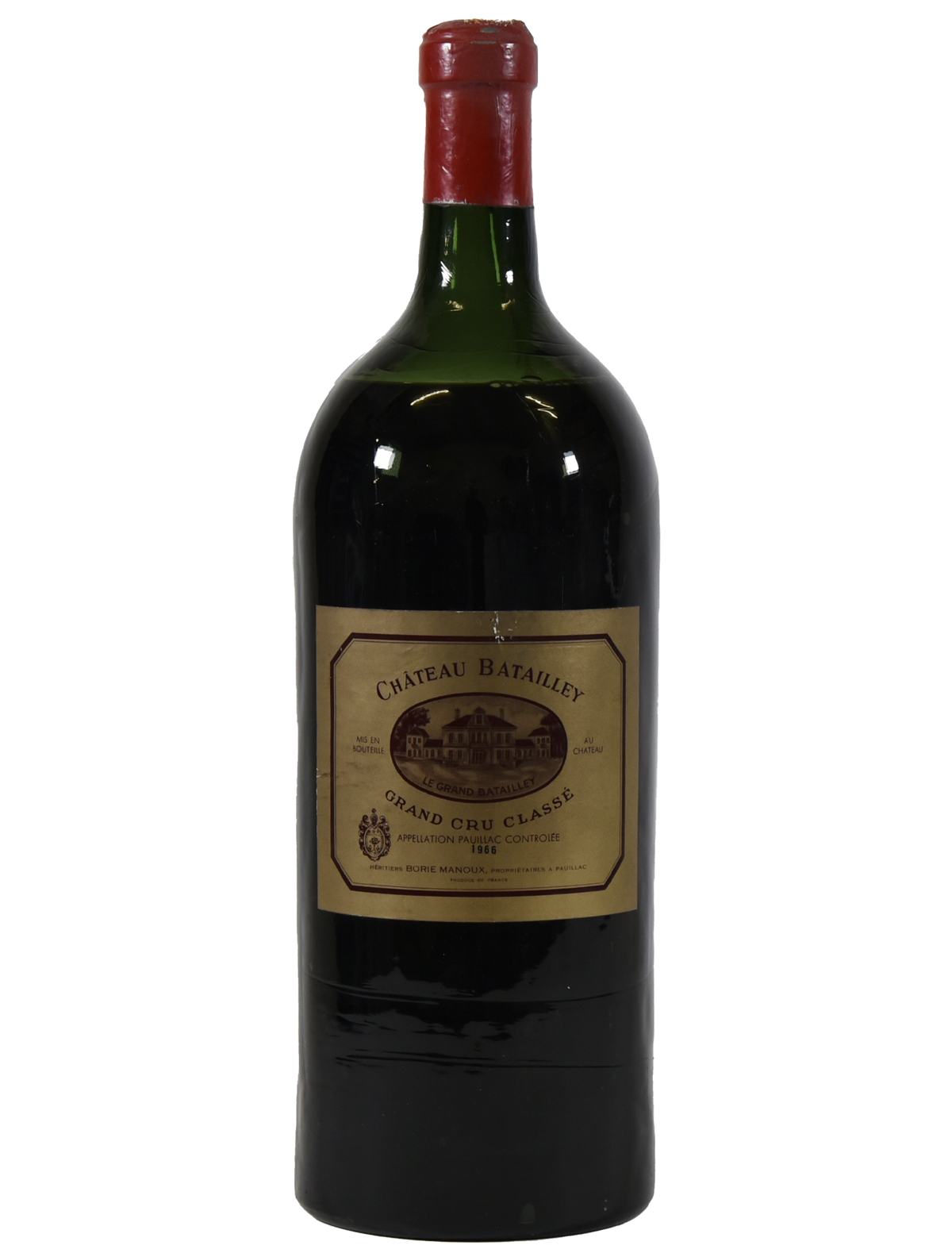
The wine
- Colour
- Rosso
- Alcohol
- 12.5% vol
Critics' scores
- Robert Parker / Wine Advocate 88
Tasted at the Académie du Vin, the 1966 Batailley has a similar bouquet to the bottle encountered back in 2011, with scorched leather and cigar box aromas infusing the black fruit. This example had a touch of tarriness. The palate is medium-bodied and foursquare, stocky and broad-shouldered without the finesse that you find on the best examples of the 1961. Nevertheless, there is commendable depth given its age—irony in character with veins of dried orange peel lacing the finish that admittedly feels abrupt. Drink soon if you still own any bottles. Tasted April 2016.
- René Gabriel 15
Zweimal verkostet, beide Male mit der gleichen Wertung, Letzte Notiz aus dem Jahr 2001, als ich den Wein mit Philippe Castéja auf Château Lynch-Moussas trank: Immer noch eine intakte Farbe. Auch hier stört wieder, wie schon vor fünf Jahren dieser Polyesterton, der ihm eine medizinale Note verleiht. Schlanker, eleganter Gaumen, aber irgendwie erinnert man sich trotz der Gefälligkeit im Gaumen immer wieder an diesen eigenwilligen Nasenton. Vielleicht hilft stundenlanges Dekantieren. Der Wein wäre an sich recht gut von der Kontur her. austrinken
The producer: Château Batailley
Château Batailley is one of the oldest estates in Pauillac and has been classified as a Fifth Growth since the 1855 Classification. Its name is believed to refer to a battle fought on these lands in 1453, during the Hundred Years' War. Vines have been cultivated here since the 17th century, reflecting the long winemaking tradition of this historic estate.
At the beginning of the 19th century, Daniel Guestier acquired the property and set about modernising it, expanding the vineyard and improving the quality of its wines. These efforts contributed to Batailley's recognition in the prestigious 1855 Classification. In 1924, Marcel and Francis Borie acquired the estate, marking the beginning of its history with the Borie-Castéja family. When the property was divided in 1941, Marcel retained Château Batailley, while the other part wuld become Chateau Haut-Batailley.
Since the 2000s, under the direction of Philippe Castéja, Chateau Batailley has continued its pursuit of excellence. In 2006, the estate introduced a new vat room, enabling plot-by-plot vinification. Today, this historic property remains deeply connected to its identity and the terroir of Pauillac, perpetuating several centuries of winemaking history.