

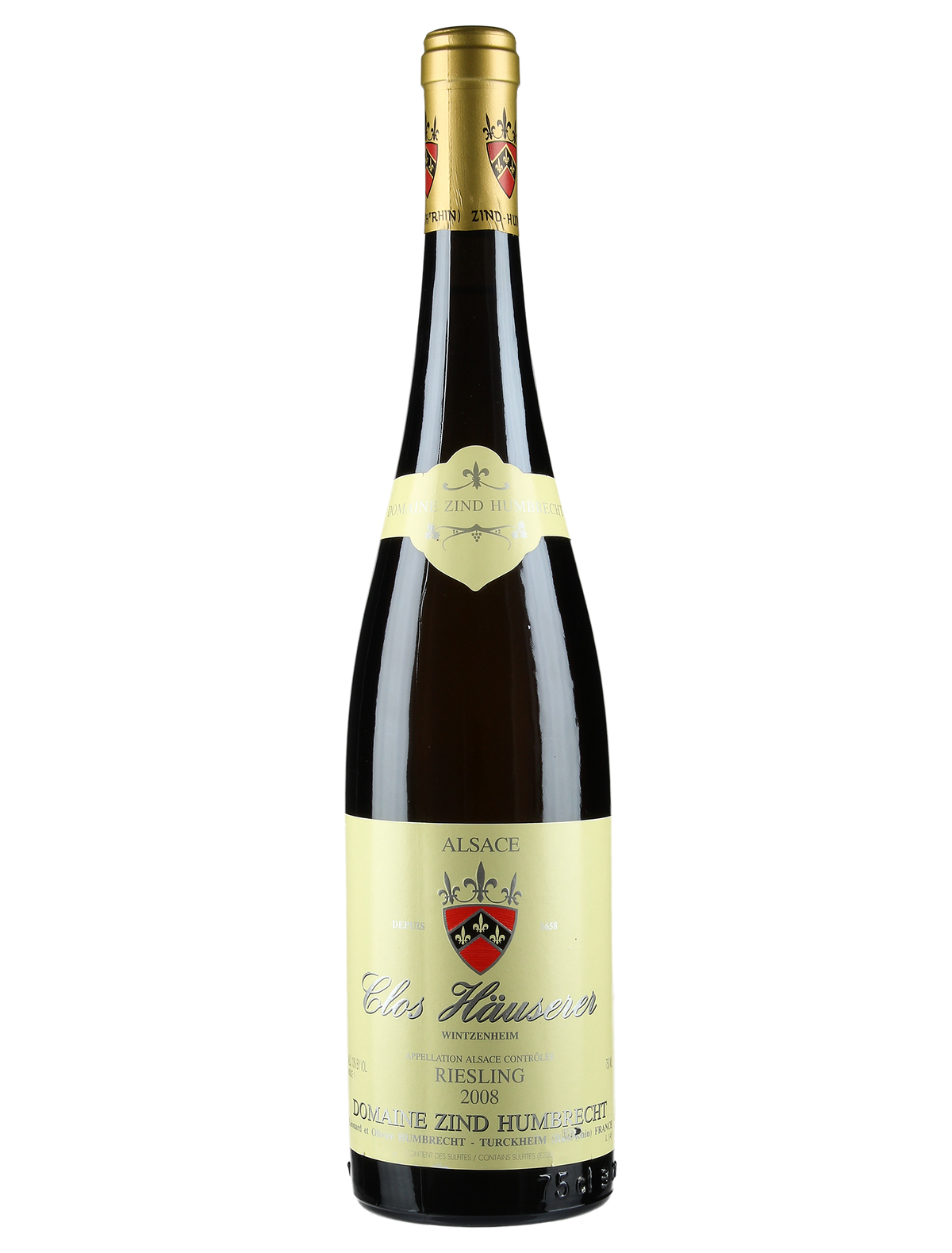
L'immagine del prodotto è da intendersi a scopo illustrativo e potrebbe non rispecchiare esattamente le caratteristiche reali del vino.
Tutte le annate
Il vino
- Colore
- Bianco
- Alcol
- 13.0% vol
Punteggi della critica
- Robert Parker / Wine Advocate 91
Oyster shell, salt spray, and kelp lend the Zind-Humbrecht 2008 Riesling Clos Hauserer a strikingly marine cast. Clear and juicy if relatively austere, this persists in its oceanic ways while deploying fresh citrus and tart plum to every crevice of the mouth, leaving a bracing, invigorating, saliva-inducing, rapier and mineral-tinged finishing impression. An over-10 grams acidic, 12.8% alcohol Riesling, it be worth following for a good 15 years (“perhaps longer,” suggests its author) though it is best suited for those whose archetype of Alsace Riesling may strike other wine lovers as severe. “The grapes were beautiful gold, not the least green,” notes Humbrecht, “so I have to admit that I was surprised when I learned the acidity of the wine.” He assures me that it underwent malo – there just wasn’t much malic acid to transform! Tasting the Zind-Humbrecht collections armed with what one knows of these vintages from most other establishments, both the 2008s and 2009s will harbor surprises. A number of 2008s are ornery in finished acidity, and some are more marked by botrytis than most other exemplars of their vintage from top addresses, this occasionally taking the form of fungal notes and piquancy that some tasters may find off-putting. The 2008 harvest began here already on September 23, lasting exactly one month. Selectivity in October – especially with Pinot Gris – consisted, explained Humbrecht, more in the careful removal of healthy bunches to insure some dry wines, with the remaining crop being left until later, the opposite of what more usually happens and at many other top-quality Alsace (or German) estates – notwithstanding the literal meaning of the expression “vendange tardive.” “Gewurztraminer was the last to ripen,” notes Humbrecht, and presumably for that reason grape sugars were very high by the time he picked, making for a collection nearly all of which exhibits V.T.-like sweetness. “It was almost easier and more sensible to make S.G.N. this vintage than V.T.,” remarks Humbrecht by way of explaining why he rendered six of the former and only one 2008 wine in the latter category. “If there had been pressure to harvest,” he notes, “then we would have had V.T.s instead.” The majority of 2008 Rieslings – as well as the Pinot Blanc and two Muscats – were not bottled until February, 2010 on account of their high acidity and/or sluggish fermentations. But most of those wines underwent malo and finished dry or virtually so. (The yeasts and beneficial bacteria may have found it tough working in such a low pH medium, but – eventually – they succeeded.) Yet even in early-harvested instances, Humbrecht says that the proportion of malic acidity – which thereafter diminished – was never higher than one-third. Most of the 2008 vintage Pinot Gris and Gewurztraminer, even including the S.G.N.s, were bottled already in September, 2009. The surprise on tasting the Zind-Humbrecht 2009s is an entirely pleasant one. The exceptional expressiveness of so many of these wines – even if Olivier Humbrecht admits that “they aren’t always perfectly precise or pure” – is surely in large part a tribute to vineyard management that permitted such a substantial portion of so large a crop to be picked unusually early, yet expressively ripe, although, a few sites succumbed to fortunately noble rot. Among practices to which Humbrecht points as relevant to his 2009 quality is his elimination in recent years of vine hedging to achieve earlier and more uniform flavor ripeness without excess grape sugar. Instead, his crew now lets the tips grow and then laboriously ties or tucks them back into the canopy, an approach for which fellow-proponent of biodynamics Lalou Bize-Leroy has become well-known. Against a background in vintage 2009 of wines that fermented rapidly for most growers, Humbrecht explains that this was the case for many of his, too; but some that had stopped with significant residual sugar over the winter began fermenting again in early
- Wine Spectator 92
Juicy acidity enlivens the quince, white peach, salt and stone notes of this bold Riesling, which is firmly structured, but still stylish and well put together, thanks to the fine balance and length. A pretty floral note lingers on the finish. Drink now through 2020. 500 cases made. –AN
Il produttore: Domaine Zind Humbrecht
L'unione di due grandi famiglie di viticoltori avvenne con il matrimonio di Léonard Humbrecht di Gueberschwihr e di Geneviève Zind di Wintzenheim, nel 1959. La combinazione dei domaine si è trasformata in una delle tenute più imponenti di Alsazia. Il vigneto di 40 ettari si estende su diversi terroir, nelle regioni di Thann, Hunawihr, Gueberschwihr, Wintzenheim e Turckheim. I terreni sono coltivati completamente con metodo biodinamico e ogni appezzamento è coltivato singolarmente. Producono più di trenta vini in ogni annata e si utilizzano solo i frutti più maturi per creare vini pieni, concentrati e intensi. Ogni vino è inconfondibilmente diverso dagli altri, ma tutti esprimono in modo rispettoso e senza sforzo la loro particolare origine. Zind-Humbrecht è uno dei principali produttori di vini bianchi di Francia. Su ciascuna etichetta viene indicata anche una scala di dolcezza 1 a 5 (1 per brut), rendendo più facile la scelta della bottiglia perfetta per i propri gusti. Quattro dei vigneti sono classificati Grand Cru e sono utilizzati per la produzione principale: si tratta dei vigneti Brand, Hengst, Goldert e Rangen de Thann Clos St Urbain, che producono alcuni dei migliori Riesling della denominazione.