

L'immagine del prodotto è da intendersi a scopo illustrativo e potrebbe non rispecchiare esattamente le caratteristiche reali del vino.
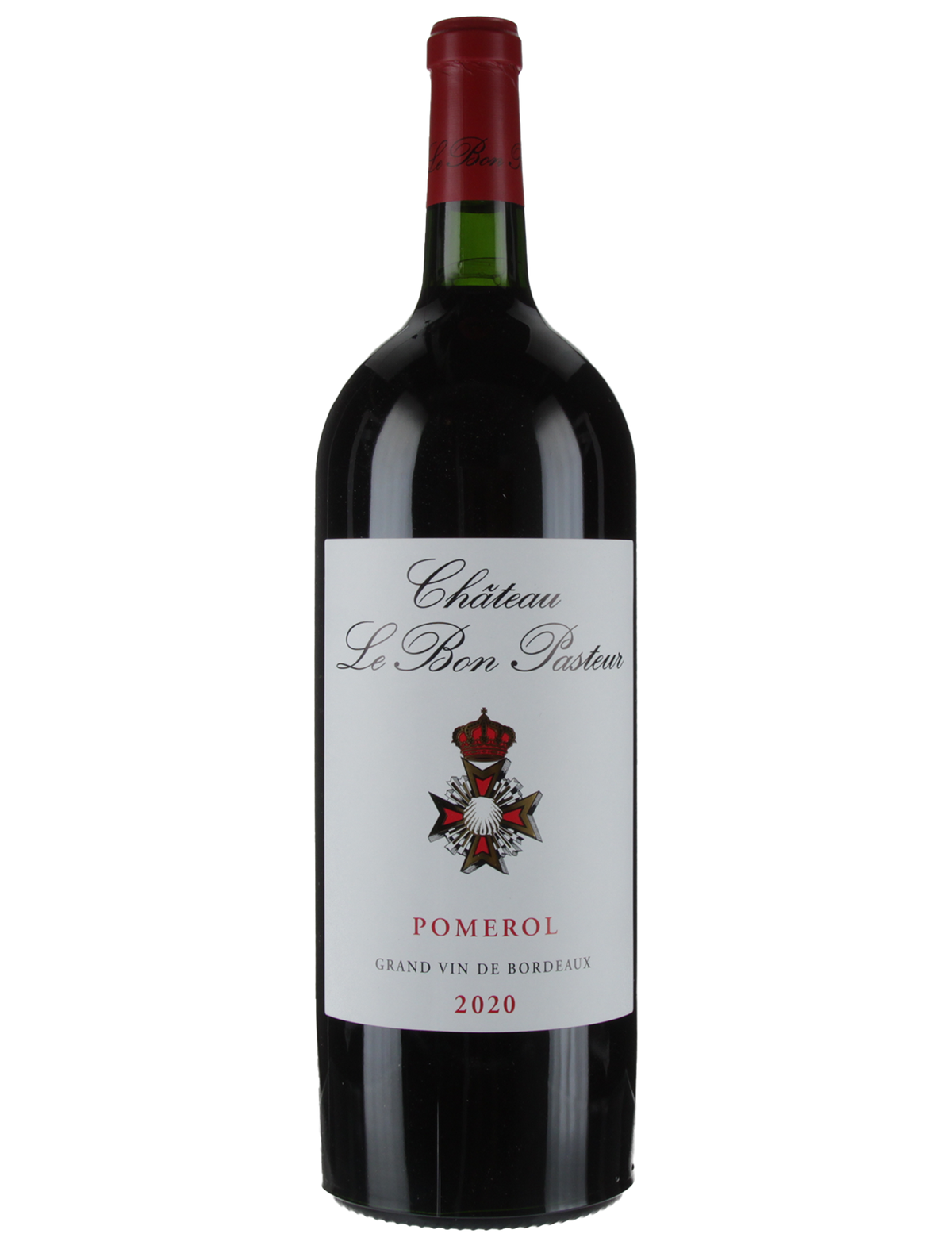
Il vino
- Colore
- Rosso
- Alcol
- 12.5% vol
Punteggi della critica
- James Suckling 95-96
Intense aromas and flavors of black and green olives to the purple fruit with some smoky barrel undertones. It’s full and flavorful. Juicy finish. Chewy at the end.
- Vinous 92-94
The 2020 Le Bon Pasteur is impressive. In fact, the 2020 is one of the best vintages I have ever tasted. Rich and deep, with terrific verve, the 2020 is magnificent right out of the gate. Dark red/black cherry, mocha, cedar and espresso all meld together in the glass. The heavy, over extracted style of the past seems a distant memory, and that is a good thing, as the purity of the fruit here is positively striking.
Il produttore: Château Le Bon Pasteur
Acquistata da Joseph ed Hermine Dupuy negli anni Venti, Château Le Bon Pasteur ha una lunga storia alle spalle. La tenuta è stata costituita dai Dupuy mentre lavoravano come mezzadri per Château Gazin. Il nome della proprietà arriva dalla Bibbia: “Tenuta del Buon Pastore”. La modesta proprietà iniziale è stata acquisita dalla famiglia Rolland attorno agli anni Venti ed è stata gradatamente ampliata aggiungendole svariate parcelle dai figli, Geneviève e Serge Rolland. Nel 1955 la tenuta ha raggiunto le dimensioni attuali di 49 riferimenti catastali distribuiti su tre denominazioni che producono tre Cru: il Château Le Bon Pasteur, che è un AOC Pomerol (6,62 ettari); il Château Rolland-Maillet, che è un AOC Saint-Émilion Grand Cru (3,35 ettari); e il Château Bertineau-Saint-Vincent, che è un AOC Lalande-de-Pomerol (5,67 ettari). Dal 1978 la tenuta è gestita dai due nipoti del fondatore, uno dei quali è Michel Rolland, uno degli enologi più stimati di Bordeaux. Michel opera come consulente per molte tenute della riva destra, in particolare quelle con un’alta percentuale di Merlot, che è la sua specialità. Nel maggio 2013, Michel ha venduto la proprietà a un investitore asiatico ed è stato il primo Grand Cru a farlo.