

L'immagine del prodotto è da intendersi a scopo illustrativo e potrebbe non rispecchiare esattamente le caratteristiche reali del vino.
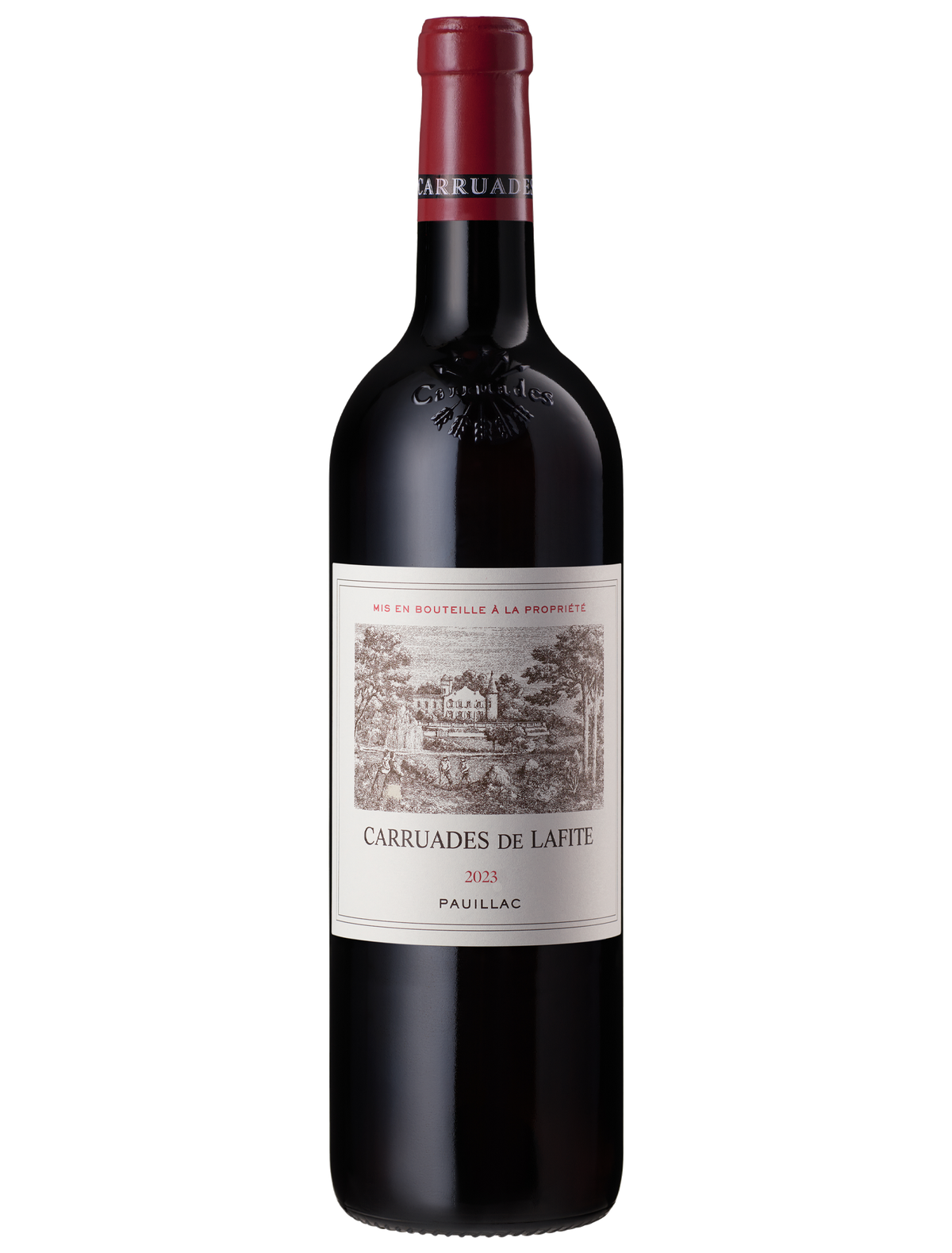
Il vino
- Colore
- Rosso
- Alcol
- 12.5% vol
Punteggi della critica
- Robert Parker / Wine Advocate 91-93
A blend of 60% Cabernet Sauvignon and 40% Merlot, the 2023 Carruades de Lafite is lovely, bursting with aromas of minty blackberries, cassis and cigar box, followed by a medium to full-bodied, fleshy and layered palate that's creamy and textural, its generous core of fruit largely concealing its powdery structuring tannins, concluding with a long, resonant finish.
Today, Château Lafite Rothschild amounts to some 110 hectares planted to some 900,000 vines (including 4.5 hectares of Cabernet Sauvignon in Saint-Estèphe). If that figure strikes readers as smaller than it used to be, that's because Lafite has ripped up some less optimally situated plots that never tended to produce wine fit for inclusion in the grand vin. As of 2021, what's more, organic conversion is underway (15 hectares are already farmed biodynamically); and hedges and flowering borders, planted with native species, now begin to break up the monoculture of the vine. Cover crops, too, have been added to the viticultural team's agronomic arsenal and are delivering good results in parcels with more humid or clay-rich soils. In the winery, Lafite is meticulously traditional—the grapes are sorted twice, once optically, and see a classical maceration in wooden and cement tanks with pump-overs and some use of the "air pulse" system that disrupts the cap and oxygenates the ferment without the need for a full pump-over. Malolactic fermentation, as ever, is in tank, and the wine matures in barrels that are mostly produced in-house, with a light toast, favoring the forests of Allier and Nevers. Each vintage is racked three times, traditionally, with one egg white fining (which requires up to 8,000 eggs). As is the case almost everywhere in the Médoc, the tendency is for less and less Merlot in the assemblage. - James Suckling 95-96
A savory and juicy Carruades with softness and notes of ripe berry, cedar and dried tobacco. Like Lafite from the 1980s but more precise. Round and pretty. It really grows on the finish with such sweetness of fruit and length. Pointed, fine tannins at the end. Very long. A blend of 60% cabernet sauvignon and 40% merlot.
Il produttore: Château Lafite Rothschild
Tradizionale, elegante e leggendaria: sono solo alcune delle parole che possono descrivere la tenuta di Bordeaux più famosa del mondo, Château Lafite Rothschild. Di proprietà dei Domaines Barons de Rothschild sin dal XVIII secolo, la tenuta Premier Cru è rimasta "leader per i vini pregiati", producendo vini di altissima qualità per decenni. Tra i più grandi produttori del Pauillac, la tenuta possiede oltre 100 ettari di vigneti piantati per il 75% a Cabernet Sauvignon, 20% a Merlot, 4% a Cabernet Franc e solo per l'1% a Petit Verdot. Due terzi dei vigneti formano un solo grande appezzamento intorno allo Château, mentre il terzo rimanente si intreccia con quelli di Duhart-Milon. La rinomata azienda vitivinicola del Médoc produce un Grand Vin profumato ed espressivo, il Château Lafite Rothschild, che rappresenta l'essenza dell'armonia tra uomo e natura. Con lo stesso senso di raffinatezza, Les Carruades de Lafite Rothschild è prodotto con un contenuto maggiore di Merlot. Questo vino eccezionale è molto più ragguardevole di una seconda etichetta media. Entrambi i vini trascorrono da 15 a 20 anni di cantina, per raggiungere la massima omogeneità tra i potenti tannini e gli aromi di cedro e ribes nero.