

The product image is for illustrative purposes only and may not exactly reflect the actual characteristics of the wine.
The wine
- Colour
- Red
- Alcohol
- 14.5% vol
Critics' scores
- Robert Parker / Wine Advocate 93
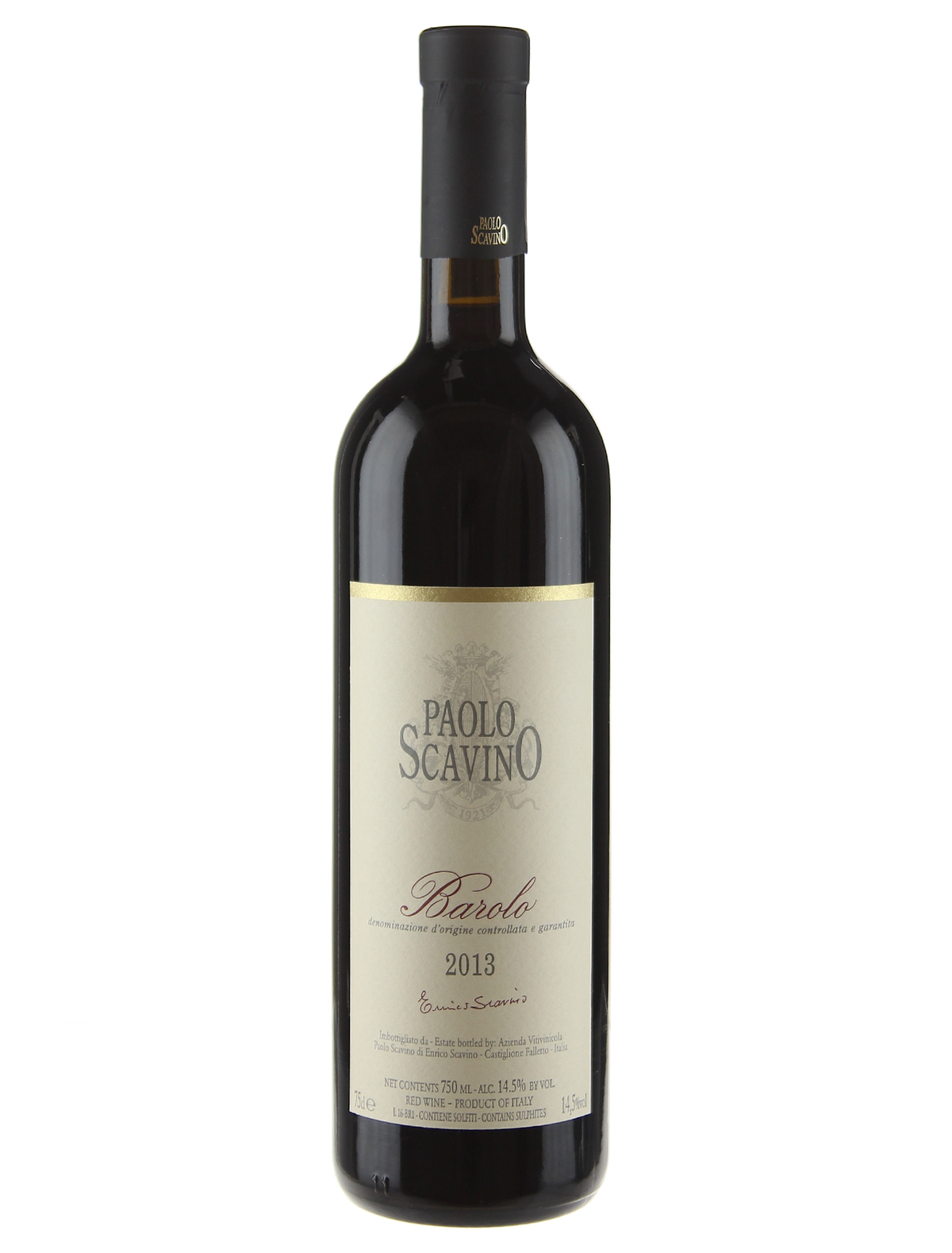
The Paolo Scavino 2013 Barolo sports the depth and elegance that famously characterizes the house style. Fruit is sourced from various points across the appellation and the specific blend changes according to the needs of the vintage. Among the various Barolo wines made by this estate, this wine is the most accessible and approachable for sure. The bouquet offers compelling aromas of black fruit and dried blackberry and there's plenty of spice, licorice and tar at the back. The wine shows its complexity as well as its varietal purity. You'll notice the handwritten signature of patron Enrico Scavino on the front label.
- Wine Spectator 92
Intense and firmly grounded, this offers aromas of cherry, licorice, wild herbs and tobacco, with dense, dusty tannins and excellent length. Complex and balanced, this should hit its stride in a few years. Best from 2020 through 2032. 2,166 cases made.
- James Suckling 95
Wow. Love the perfumes to this with plums, cherries and hints of flowers. Full body, chewy tannins, polish and precision. Relatively delicate finish. Drink in 2018.
The producer: Azienda Vitivinicola Paolo Scavino
Paolo Scavino is one of Italy’s leading estates, they have produced the finest examples of Barolos since the 1920s. Established by Scavino family, Enrico Scavino has been at the helm of this estate for many years. A visionary in the vinous field, Enrico is one of the main figures responsible for Piedmont’s astonishing reputation. The Paolo Scavino estate is home to the greatest 29 hectares of vineyard holdings in the region, including the leading Crus of Barolo - Cannubi, Bric dël Fiasc and Rocche dell’Annuziata. Vinifying the wines parcel by parcel allows the domaine to perfect their wines. Today, Enrico’s daughters, Elisa and Enrica help manage the estate. Their flagship, Bric dël Fiasc symbolizes one of the earlier examples of Barolo single-vineyard bottlings, with the first vintage being produced in 1978.