

The product image is for illustrative purposes only and may not exactly reflect the actual characteristics of the wine.
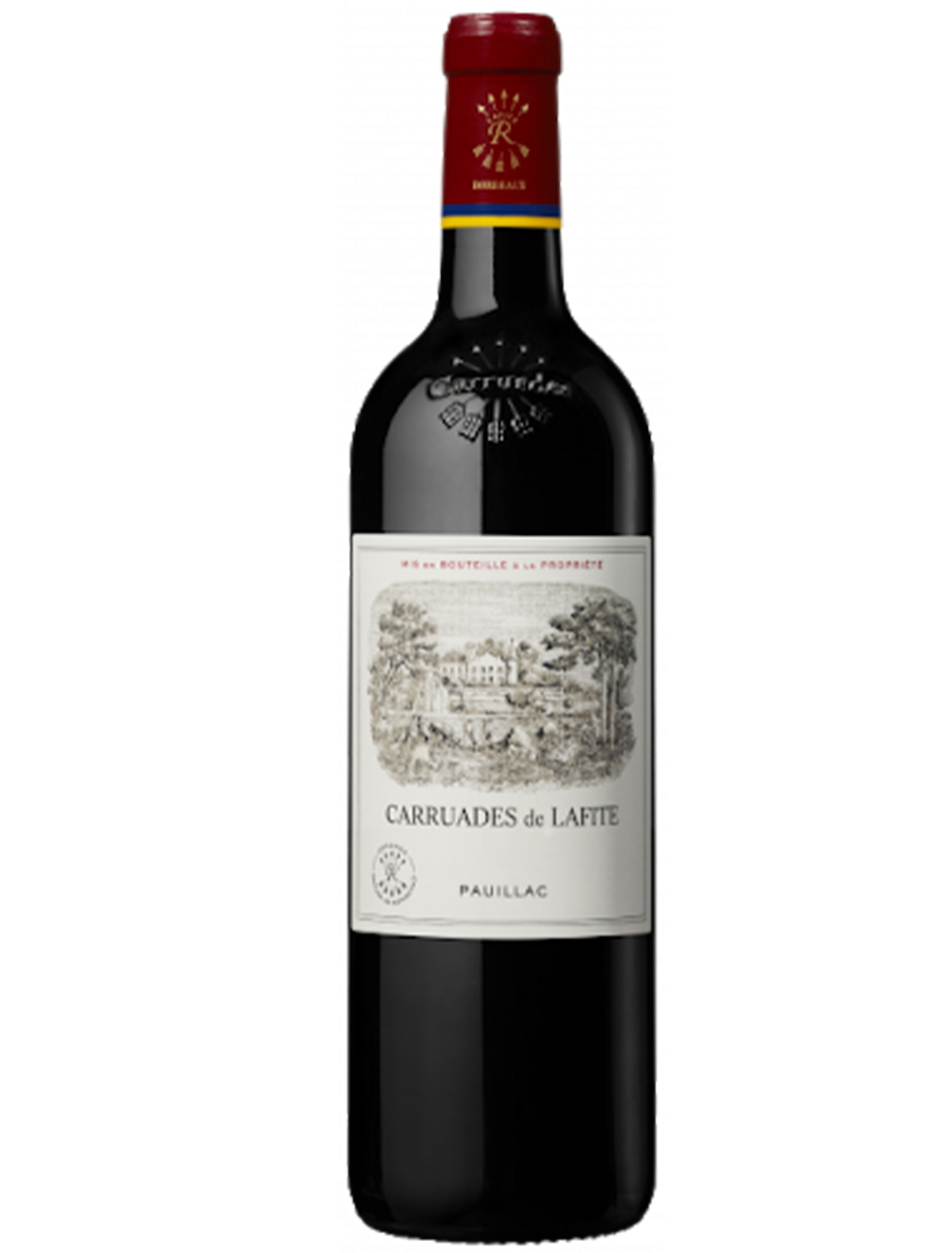
The wine
- Colour
- Red
- Alcohol
- 12.5% vol
Critics' scores
- Robert Parker / Wine Advocate 91-93
Deep purple-black in color, the 2020 Carruades de Lafite, like its big sibling, is a little youthfully shy to begin, soon unfurling to offer notes of Morello cherries, raspberry leaves, baked blackberries and spice box, plus suggestions of pencil lead, lavender and Provence herbs. The medium-bodied palate is chock-full of juicy black fruits, framed by velvety tannins and tons of freshness, finishing long and lifted. This 2020 is a blend of 52% Cabernet Sauvignon, 42% Merlot, 3% Cabernet Franc and 3% Petit Verdot.
- James Suckling 96-97
This is very classically structured with a palate that starts off slowly. Full-bodied and chewy with a soft, creamy texture and a long finish. Savory. A touch austere. 52% cabernet sauvignon, 42% merlot and 3% cabernet franc, the rest petit verdot.
The producer: Château Lafite Rothschild
Traditional, elegant, and legendary – are just a few words that can describe the world’s most famous Bordeaux estate, Château Lafite Rothschild. Owned by Domaines Barons de Rothschild since the 1700s, the First Growth estate has remained the “leader among fine wines,” producing top-quality wines for decades. As one of the largest producers in Pauillac, the estate owns over 100-hectares of vineyards planted to 75% Cabernet Sauvignon, 20% Merlot, 4% Cabernet Franc, and a mere 1% Petit Verdot. Two-thirds of the vineyards form a single plot around the château, while the third parcel intertwines with those of Duhart-Milon. The renowned Médoc winery produces a fragrant and soulful Grand Vin, Château Lafite Rothschild that represents the essential harmony found between man and nature. In the same spirit of distinction, Les Carruades de Lafite Rothschild is produced with a higher content of Merlot, this exceptional wine is much more impressive than an average second label. Both wines benefit from 15 to 20 years of cellaring, to achieve the ultimate unity found between the powerful tannins and the aromas of cedar and cassis fruit.